New Delhi (RNS): 27 FEB 2026
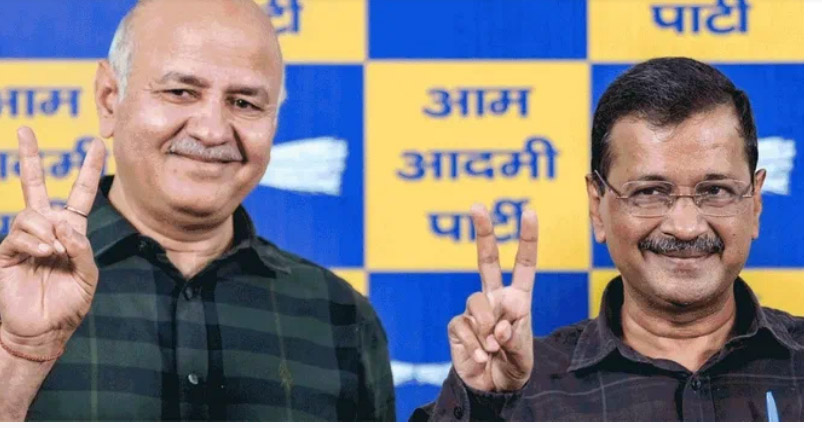
n a major development in the Delhi excise policy case, the Rouse Avenue Court has dismissed the CBI’s voluminous charge sheet, giving a clean acquittal to Delhi Chief Minister Arvind Kejriwal. The court termed the investigation contradictory and lacking credible evidence, and recommended action against the investigating officers.
Special Judge Jitendra Singh, in a detailed 598-page order, ruled that neither the main charge sheet filed on November 24, 2022, nor the four supplementary charge sheets established any concrete proof of criminal wrongdoing. The court observed that the prosecution failed to substantiate allegations of criminal conspiracy and that the documents placed on record did not align with witness statements.
During the hearings, the judge repeatedly expressed displeasure over the manner of investigation. He noted significant contradictions in the charge sheet and remarked that the thousands of pages submitted by the agency failed to support the claims made. The court also commented on the time spent in custody by the accused. Senior AAP leader Manish Sisodia remained in jail for nearly 530 days, while Kejriwal spent 156 days in custody across two intervals. Kejriwal had earlier been granted bail by the Supreme Court of India on September 13, 2024, in the CBI case. The order on framing of charges had been reserved on February 12, 2026, before the court ultimately dismissed the case.
The court strongly objected to the CBI’s use of the term “South Group” to describe certain accused persons. The judge questioned whether such terminology would have been used had the case been filed in Chennai, calling the term prejudicial. Referring to a U.S. case where the use of a collective label led to dismissal, the judge observed that such expressions create bias and should not have been used.
Appearing for Kejriwal, senior advocate N. Hariharan argued that there was no substantive evidence against his client. He pointed out that Kejriwal’s name did not appear in the first three charge sheets and was added only in the fourth supplementary charge sheet. He maintained that the Delhi Chief Minister was performing official duties and that there was no evidence he demanded money from any alleged lobby. The judge also expressed dissatisfaction when the CBI referred to a “confessional statement” kept in a sealed cover, stating that even the court had not been provided with a copy. He emphasized that complete transparency and fairness were expected from the investigating agency.
In a notable remark, Judge Singh said, “When you read a file deeply and repeatedly, the files begin to speak to you,” indicating glaring inconsistencies in the prosecution’s case. The court described the CBI’s allegations regarding the 2021–22 excise policy as assumption-based rather than evidence-driven. The verdict has triggered a fresh debate over the functioning and impartiality of central investigative agencies in politically sensitive cases.


Kejriwal Acquitted: Court Recommends Action Against CBI Officials



Leave a Reply
Latest Post
- Trending
- Comments
- Latest